
Key Takeaways from ASTC 2026
Attending the annual Association of Science and Technology Centers (ASTC) conference is always a good reminder of why we do the work we do. Reconnecting with longtime friends, making new connections, and engaging in thoughtful, inspiring conversations is such an incredibly rewarding experience. I returned from the conference re-energized by the stories, case studies, and shared passion driving our field forward.
Across conference sessions and in my conversations with museum leaders, an important theme emerged: sustainable growth happens when we move beyond transactional encounters toward building genuine emotional connections with our audiences.
I’d like to share my takeaways from one of the standout sessions from the conference.
The Shift from “Wow” to Awe
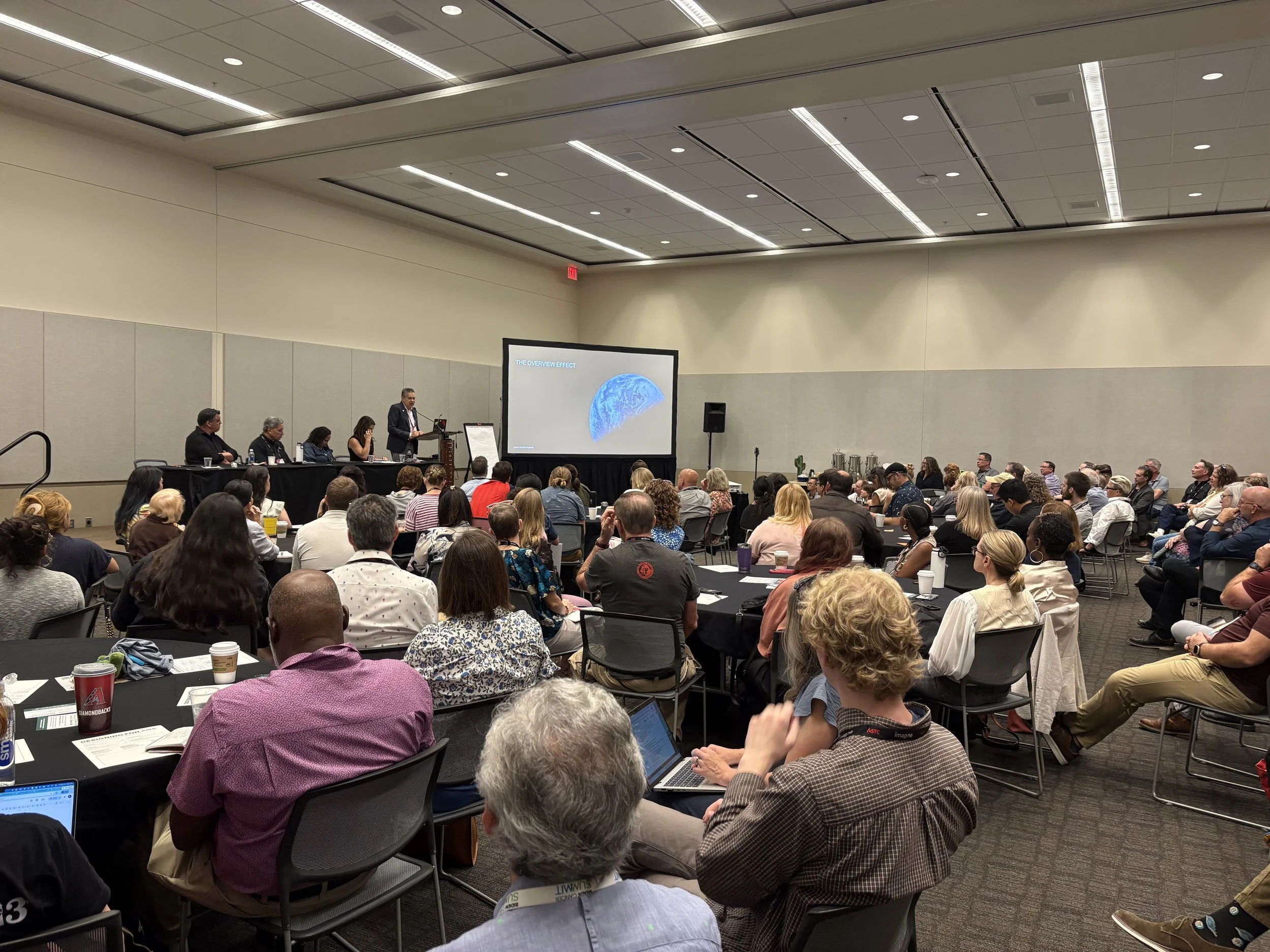
“Designing for Awe: Why Big Feelings Are the Missing Link in Science Learning” at ASTC 2026. Photo by Rosie Siemer.
It was standing room only at the session “Designing for Awe: Why Big Feelings Are the Missing Link in Science Learning”, and for good reason: the topic focused on how a striking exhibit can trigger an immediate, surface-level "wow," but true awe operates on a much deeper level.
Moderated by AJ Goehle (Luci Creative) and featuring museum leaders Dr. Chevy Humphrey (Griffin Museum of Science and Industry), Jeff Rudolph (California Science Center), Michael Horvath (Museum of Science, Boston), and William Harris (Space Center Houston), this session explored how intentional design can transform a fleeting impression into a lasting emotional bond.
Awe alters how visitors process an experience. It creates a cognitive and emotional shift that lowers perceived threats, deepens memory encoding, and opens minds to big ideas and broader perspectives.
Highlighting the bridge between design and resonance, William Harris, President and CEO of Space Center Houston, captured the essence of audience-centered strategy sharing how relevance creates emotional connection, and emotional connection creates revelation.
Importantly, William noted that impactful design begins with audience insight, stating that you must “…start by understanding who is your audience, and where are they at psychologically? People are more likely to appeal to something when they have a way to relate to it." He further emphasized that “every institution has its own audience, community, and assets.” This is a critical observation because every cultural organization is truly unique and so are the needs and motivations of your visitors, members, and donors.
To turn this concept into practice, the panel emphasized three design pillars for cultivating awe:
Radical Accessibility: Opening physical and structural front doors to make spaces feel immediately welcoming and inclusive to surrounding communities.
Human-Centered Storytelling: Moving beyond dry facts to reveal the human courage, curiosity, and vulnerability behind scientific breakthroughs.
Active Wonder: Designing hands-on, multi-sensory entry points that invite visitors to participate directly in the act of discovery.
Ultimately, designing for awe can transform a single museum visit into a doorway for lifelong curiosity, community participation, and emotional connection.
The Takeaway
Whether you’re designing awe-inspiring exhibit experiences or community-focused architectural plans, the primary goal remains: to build experiences that give people a clear reason to visit, a reason to come back, and a reason to believe their support truly matters. When we prioritize emotional resonance, long-term loyalty naturally follows.